The healthcare clowns work alongside clinical teams to help children and dementia patients:
- feel less fear, anxiety and loneliness
- cope better and feel braver
- communicate when words are hard
- experience relief, laughter and connection
- recover from illness / treatment sooner
Person centered
Visits are made for and by the people we see. They're bespoke, live, unique and inclusive.
The Red Nose
The world's smallest mask. A universal symbol for play. We don't wear makeup or big shoes or curly wigs. We're open, responsive and sensitive.
Creating connections
Healthcare clowns connect with people by listening, playing, engaging and empowering.
You are the Champion
You are the champion, the expert, the hero, and we Clowns always need your help. We're always the sidekick to your ideas and responses. We help empower those with little power with our naivety and eagerness to please.
“I have seen a child go from extreme distress to calm and engaged within minutes of a Clowndoctor arriving. It changes everything—for the child, the family and the clinical team.”
— Dr Fraser Barratt, RHCYP Edinburgh
Further reading and research about Therapeutic Clowning
“I love the way you respond to a childs mood individually”
Every visit is unique
made for and with the person we see
1.5%
Less than 1.5% of Children and Young People in Scottish Hospitals get to see a Clowndoctor
23%
Clowndoctors are not just for laughs. A visit from the Clowndoctors can help reduce your hospital stay by up to 23%
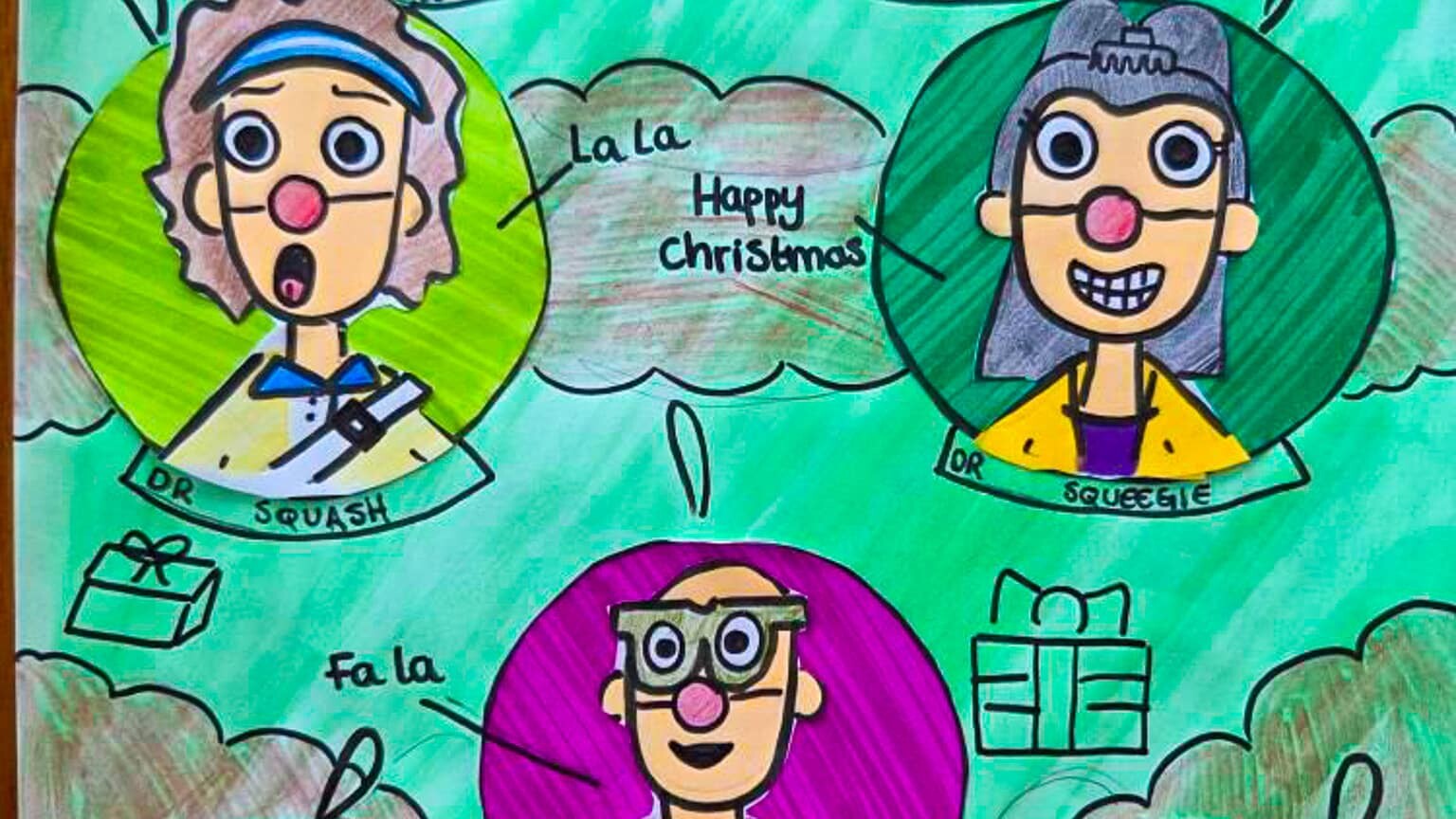
Our Clowndoctors and Elderflowers are trained healthcare clowns. This means they are professional performers who use clowning techniques such as improvisation, surprises, music, slapstick, celebrating mistakes, rhythm and naivety to create a unique,
tailor-made fun visit, just for you.




 behind
